Buyers Guide: Selecting Steel Profiles for Long Span Steel Buildings
Buyers must align steel profile selection with structural loads, span length, and material procurement constraints. This guide outlines key criteria for evaluating steel beams and profiles in long span steel buildings, helping procurement managers make informed decisions.
- Match steel profile geometry and grade to actual span loads, not generic stock.
- Verify mill test reports against project specifications before shipment.
- Coordinate profile choices with connection design and erection tolerances.
- Account for lead times and mill capacity when procuring long span structural steel.
- Confirm compliance with applicable building codes and seismic requirements.
What Determines the Right Steel Profile for a Long Span Building
Long span steel buildings place higher demands on structural steel than standard commercial or light industrial structures. The primary challenge is controlling deflection and bending stress across distances that often exceed twenty meters. Buyers must select steel profiles that balance strength, stiffness, and material efficiency under these conditions.
The choice of steel profile is not a simple matter of picking the largest available section. A heavier section may satisfy strength requirements but increase dead load, which feeds back into column, foundation, and connection sizing. Procurement managers must work closely with structural engineers to identify the governing load cases before finalizing the steel take-off.
How to Evaluate Steel Beam Selection for Long Span Loads
Steel beam selection for long span structures depends on several interacting factors. The first is the span length itself. As span increases, the bending moment grows with the square of the distance, and deflection grows with the fifth power. This means small increases in span length can require significantly larger cross sections or higher strength grades.
The second factor is the loading pattern. Industrial buildings often carry concentrated loads from crane rails, mezzanine floors, or heavy equipment. These point loads demand deeper sections or specialized profiles that resist local buckling. Snow, wind, and seismic loads also contribute to the design, and the profile must be selected to handle the combined effects.
The third factor is serviceability. Even if a beam meets ultimate strength criteria, excessive mid-span deflection can cause problems with cladding, glazing, or suspended equipment. Codes typically limit deflection to a fraction of the span, often around L/360 for live load and L/240 for total load. Buyers should confirm that the selected profile meets these limits under the full load combinations.
Material Procurement and Mill Capabilities
Material procurement for long span steel buildings often involves ordering profiles from mills with the capacity to produce the required lengths and grades. Standard hot-rolled I-beams, wide flange sections, and box girders are common choices. However, for very long spans, engineers may specify pre-stressed concrete composite systems or specialized steel plates welded into custom sections.
Procurement teams should confirm mill capabilities early in the design phase. Some mills produce profiles up to specific lengths and thicknesses. If the project requires longer members, the steel may need to be fabricated in segments and field spliced, which adds cost and erection complexity. Lead times for long span structural steel can extend well beyond standard building components, so early ordering is critical.
Mill test reports must be verified against project specifications. Each heat number should be traceable to a mill certificate that confirms chemical composition, mechanical properties, and test results. Importing steel adds another layer of compliance work, and buyers should require certificates in the language and format accepted by the project jurisdiction.
Key Criteria for Choosing Steel Profiles
The table below summarizes the main criteria procurement managers should use when evaluating steel profiles for long span steel buildings.
| Criterion | What to look for | Why it matters |
|---|---|---|
| Span length and loading | Match profile depth and width to calculated bending moments and shear forces | Prevents under-design and excessive deflection |
| Material grade | Confirm yield strength and elongation meet code and engineer requirements | Affects section size, cost, and connection design |
| Fabrication and connection details | Verify profile geometry works with bolted or welded connections at supports and splices | Reduces field rework and erection delays |
| Deflection limits | Check calculated deflection against code serviceability limits | Protects cladding, glazing, and suspended equipment |
| Mill lead time and capacity | Confirm the mill can deliver required lengths, grades, and quantities on schedule | Prevents project delays and expediting costs |
| Traceability and certification | Require mill test reports and certificates for each shipment | Ensures material compliance and import documentation readiness |
Connection Design and Erection Considerations
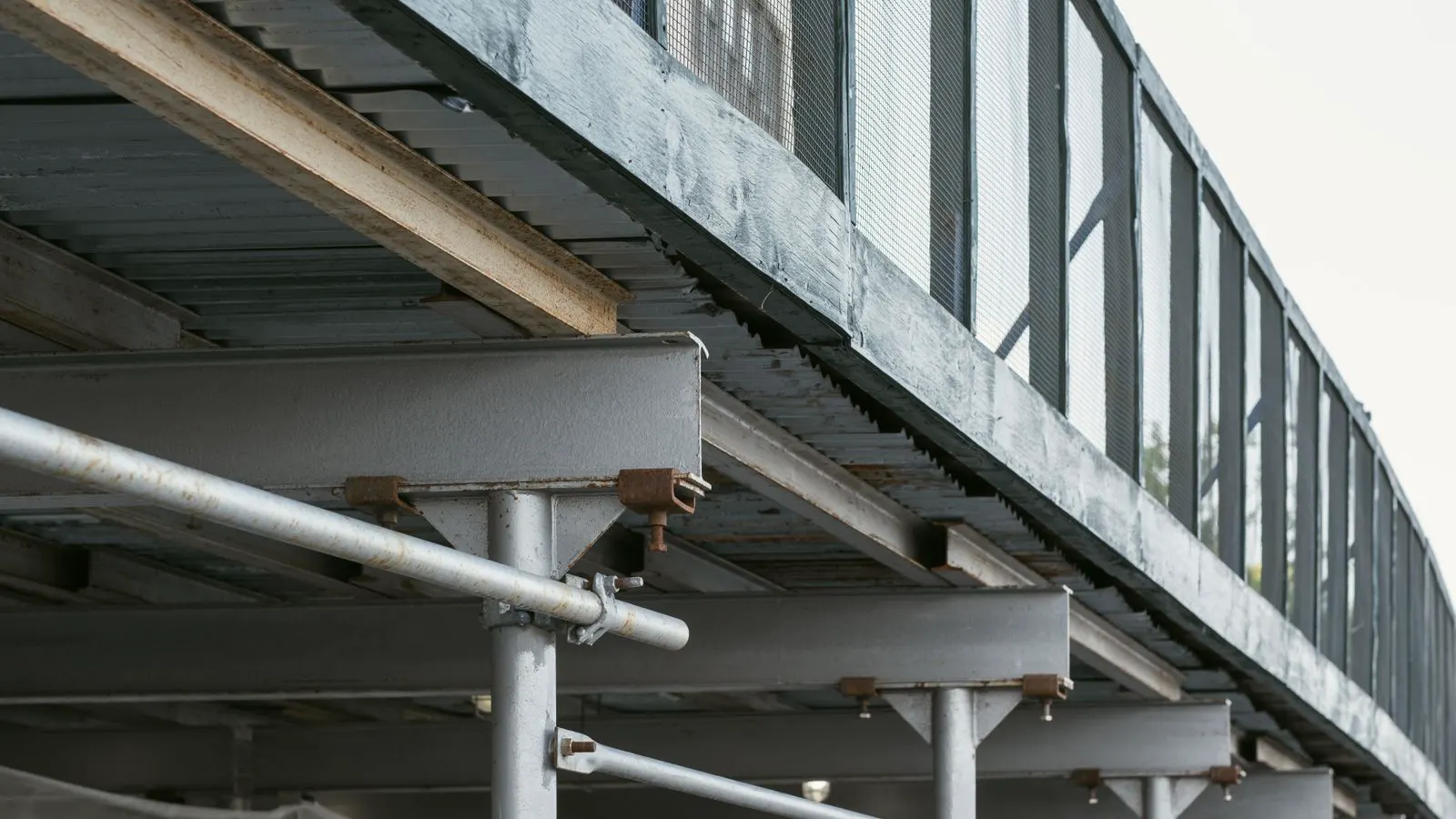
The steel profile you choose affects not just the beam itself but the entire connection system. Long span beams often require moment connections at supports to transfer bending stresses back into columns. These connections can be stiffened with plates, doubler angles, or special shapes. The profile geometry must allow for the required bolt holes, weld access, and stiffener placement.
Erection tolerances also matter. Long spans are typically erected with temporary bracing until the structure is fully connected and stable. Profile straightness, twist, and dimensional accuracy influence how well the beam fits into the connection. Buyers should specify dimensional tolerances in the steel purchase order, particularly for critical members that cannot be field-adjusted.
Corrosion protection is another factor tied to profile selection. Long span buildings often have large roof areas and long maintenance cycles. Pre-coated or hot-dip galvanized profiles can reduce lifecycle costs, but they may limit connection types. For example, galvanized surfaces require special bolted connections or field prep to achieve proper weld quality.
Code Compliance and Seismic Requirements
Long span steel buildings must comply with applicable building codes, which set minimum requirements for material strength, connection design, and lateral force resistance. Seismic codes may require additional bracing, moment connections, or ductile detailing in the connections, even if the primary members are standard rolled profiles.
Buyers should confirm that the selected steel profiles are compatible with the project’s seismic design category. In high seismic zones, connections may need to be designed for inelastic yielding, which can influence the choice of connection hardware and the profile’s web and flange dimensions. The steel itself does not need to be special, but the connection design and fabrication quality must meet the higher demand.
Code compliance also extends to fire protection. Long span buildings often require fire-rated connections and members. The profile selection must allow for the required fireproofing thickness without compromising structural capacity. This can affect the choice between open and closed sections and the location of connection plates.
A Decision Checklist for Buyers
Before approving the steel profile package for a long span steel building, procurement managers should complete the following checklist:
- Confirm the structural engineer has issued the final steel take-off with profile designations, quantities, and lengths.
- Verify that the selected profiles meet the required yield strength, chemical composition, and mechanical properties per the project specification.
- Check that the profiles satisfy deflection limits under all load combinations, including live load and total load.
- Review connection details to ensure the profile geometry works with the specified bolted or welded connections.
- Confirm mill lead times align with the erection schedule and that the mill has capacity for the required quantities.
- Require mill test reports and certificates for each shipment, with heat numbers traceable to the project specification.
- Verify compliance with applicable building codes, including seismic, fire, and accessibility requirements.
- Coordinate with the fabricator and erection crew on tolerances, splices, and field adjustments.
- Document any substitutions or engineering changes in writing before approval.
- Confirm that import documentation, if applicable, includes all required certificates and permits.
Common Mistakes to Avoid
A frequent error is selecting steel profiles based on cost per ton alone. A heavier section may appear cheaper per ton but increases dead load, which grows the cost of columns, foundations, and connections. The total project cost is what matters, not the steel line item.
Another mistake is ignoring fabrication tolerances. If the profile geometry does not allow for the required bolt hole spacing or stiffener placement, the fabricator will have to modify the section in the shop or field. This creates delays and potential code issues.
Buyers also sometimes underestimate the impact of long lead times on the project schedule. Long span steel is not always available from local stock. If the mill is backlogged or the required profile is not a standard product, the project can stall. Early engagement with the supplier and mill is critical.
Finally, do not skip the traceability step. Each shipment of structural steel should be traceable to a mill certificate. Without proper documentation, the project may face delays at inspection or during import clearance.
Frequently asked questions
Can standard hot-rolled I-beams be used for long span steel buildings?
Yes, standard hot-rolled I-beams are commonly used for long span buildings, provided they are selected for the specific span length, loading, and deflection requirements.
What is the most common steel profile for spans over thirty meters?
Wide flange sections and box girders are frequently specified for very long spans, but the final choice depends on the engineer's load calculations and connection design.
How do I verify that the steel I order meets the project specification?
Require mill test reports for each heat number, confirming chemical composition, yield strength, and mechanical properties match the project specification and applicable codes.
Does material grade affect the cost of long span steel buildings significantly?
Higher strength grades can reduce section size and material quantity, which may lower cost. However, higher grade steel often costs more per ton and may require special fabrication or connection details.
What should I check before approving a steel profile substitution?
Confirm with the structural engineer that the substitute profile meets the required strength, stiffness, connection geometry, and code compliance. Do not approve substitutions without written engineering sign-off.