Bolted vs Welded Connections: Which Is Better?

There is no single winner. Bolted joints offer speed and field flexibility, while welded joints provide compact strength and lower long-term maintenance costs. The right choice depends on project constraints, access, and inspection requirements.
- Bolted connections are faster to install and allow for field adjustments without specialized equipment.
- Welded connections offer a more compact design and reduce long-term maintenance needs.
- The choice often hinges on site access, inspection access, and the need for future disassembly.
- Hybrid systems are common, using bolts for field work and welds for shop fabrication.
- A steel connection comparison must account for design, fabrication, and erection phase costs, not just the joint itself.
The Short Answer
There is no universal winner between bolted and welded joints. The decision is rarely about which method is inherently stronger. It is about which method fits the project constraints. A steel connection comparison must weigh installation speed, site access, inspection needs, and long-term maintenance.
For many large industrial projects, a hybrid approach is standard. The shop handles the heavy lifting with welded base plates and stiffeners. The field uses high-tension bolts for column-to-beam connections. This split balances quality control with erection efficiency.
The Table: Bolted vs Welded
| Option | Best for | Limitations |
|---|---|---|
| Bolted joints | Field erection, rapid assembly, future disassembly | Higher material cost, larger connection plates, bolt maintenance |
| Welded joints | Compact design, permanent structures, limited field access | Requires skilled welders, difficult to repair, requires shop or field quality control |
| Hybrid (Shop weld + Field bolt) | Most commercial and industrial steel buildings | Complex detailing, requires precise shop fabrication |
| Riveted (Legacy) | Historical structures, specific code requirements | Obsolete in new construction, labor intensive, no field adjustment |
| Adhesive (Specialty) | Thin plate, specific seismic details, corrosion sensitive areas | Limited load capacity, strict material compatibility, specialized expertise |
Why Bolted Joints Dominate the Field
Bolted connections are the workhorse of modern steel erection. When a beam meets a column, the field crew often uses high-tension bolts. These bolts are pre-tensioned to a specific torque. This tension keeps the flanges in tight contact, transferring shear loads efficiently.
The speed advantage is significant. A crew can tighten a bolted connection in minutes. A welded connection might take hours for a qualified welder to complete, plus the time for inspection and potential rework. For projects with tight schedules, this difference adds up quickly.
Flexibility is another major benefit. If a column arrives slightly out of plumb, or a hole in a plate is misaligned, a bolted connection can accommodate the error. A welded connection offers no such forgiveness. If the parts do not match, the welder must grind, fit, or weld a shim. This slows the erection process and increases labor costs.
Finally, bolted connections allow for future disassembly. If a building needs to be modified, expanded, or demolished, bolted joints can be undone and reused. Welds must be cut or ground out. This makes bolted connections preferable for modular structures or buildings where future changes are likely.
The Case for Welded Joints
Welded joints are often the choice when space is tight or when a connection needs to be compact. A welded base plate, for example, can be thinner and lighter than an equivalent bolted connection. This reduces the dead load on the supporting structure.
In shop fabrication, welding allows for higher precision. A fabricator can weld stiffeners, gussets, or flanges directly to the member. This creates a continuous structural path. For moment connections in high-rise buildings, welded flanges are common because they provide the stiffness needed to transfer rotational loads.
However, the field application of welding is a different story. Field welding requires a qualified welder, the right equipment, and controlled conditions. Rain, wind, and cold temperatures can compromise the weld. Inspection is also more difficult. A bolted joint is visually inspectable. A weld often requires destructive testing or advanced non-destructive testing (NDT) to verify quality.
Long-term maintenance favors welding. Bolts can loosen over time due to vibration or thermal cycling. They also require periodic re-tensioning. Welds, if done correctly, are permanent. There is no re-tensioning. This reduces the maintenance burden for the building owner.
Site Access and Safety
The physical environment of the site dictates much of the connection choice. If the connection is at ground level, access is easy. If it is at 30 meters above the ground, access becomes a safety and logistics issue.
Bolted connections are generally safer for high-level work. The crew can work from a basket or scaffold without needing to handle heavy welding equipment. They do not need to manage fumes or arc flash. This is a significant factor for the erection contractor.
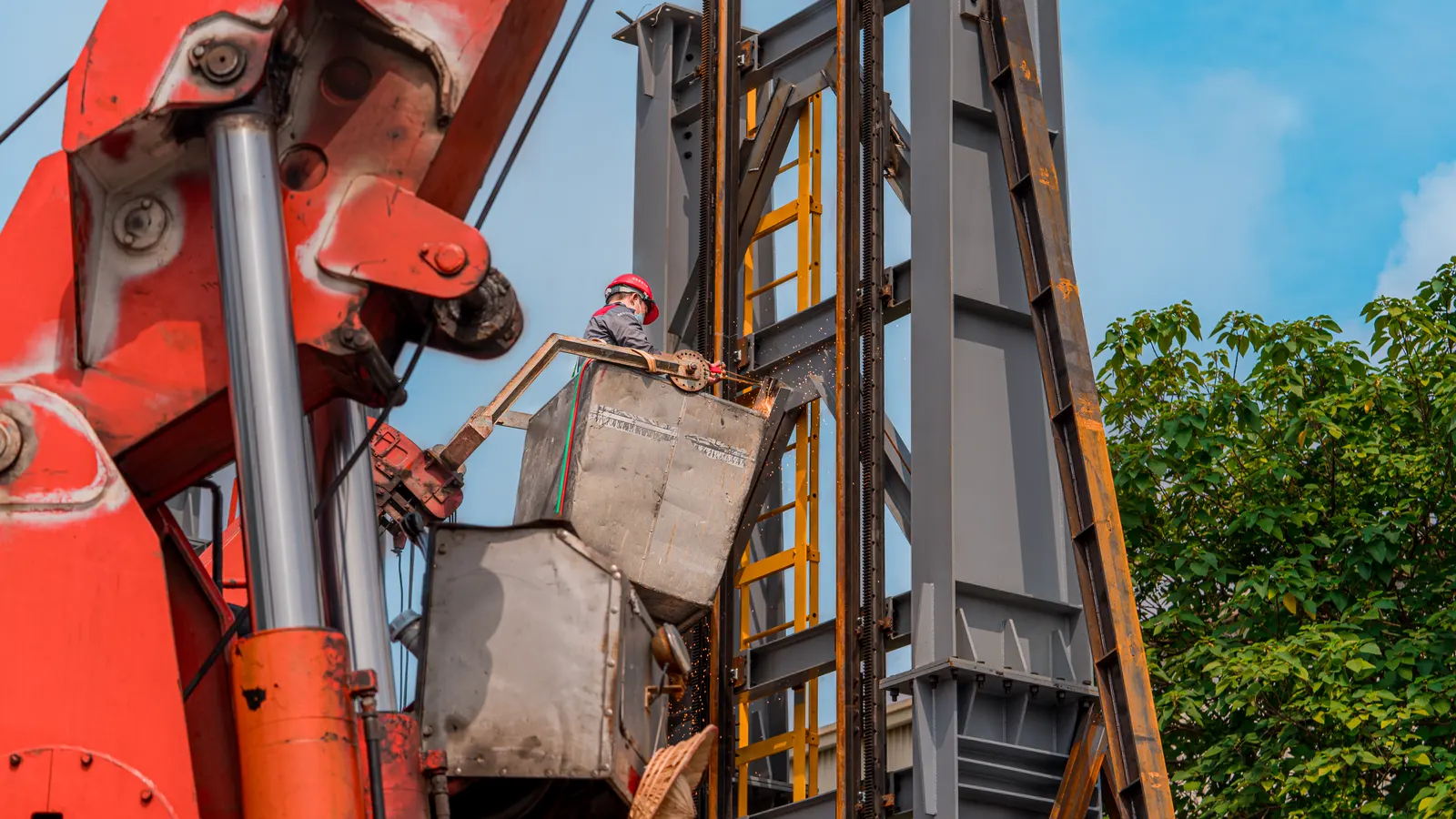
Welding at height requires additional safety measures. The area below must be cordoned off. Hot work permits are usually required. The welder needs to be secured. This adds time and cost. If the site is tight and access is limited, a welded connection might be impossible without significant mobilization.
Inspection and Quality Control
Quality control is a major differentiator. Bolted connections are easier to inspect. A bolt can be checked for tension with a calibrated wrench. The holes can be checked for alignment. The washers and nuts can be checked for damage.
Welded connections require a different approach. The welder must be certified. The procedure must be approved. The weld must be inspected. For critical connections, X-ray or ultrasonic testing may be required. This process is slower and more expensive.
A steel connection comparison must include the cost of inspection. If a project requires 100% ultrasonic testing of all field welds, the cost will be significantly higher than the cost of inspecting bolted connections. This is a hidden cost that often surprises buyers.
The Hybrid Approach
In practice, most modern steel buildings use a hybrid approach. The shop handles the welding. The field handles the bolting. This is the standard for commercial and industrial steel structures.
For example, the column base plate is welded to the column in the shop. This ensures the weld is of high quality and is accessible for inspection. In the field, the column is set on the concrete pad. The base plate is then anchored to the concrete with high-strength bolts. This combines the strength of the shop weld with the speed of the field bolt.
This approach also allows for a clear division of responsibility. The fabricator is responsible for the shop welds. The erection contractor is responsible for the field bolted connections. This clarity simplifies the contract and reduces disputes.
Choosing the Right Connection
So, which is better? It depends on the project.
If you need speed and flexibility, choose bolted. If you need a compact design and lower maintenance, choose welded. If you are building a high-rise moment frame, you likely need welded flanges. If you are building a large warehouse, you will likely use bolted column-to-beam connections.
Do not choose based on cost alone. A bolted connection may have a higher initial material cost, but it can save money in labor and schedule. A welded connection may have a lower material cost, but it can cost more in labor and inspection.
The best approach is to define the constraints early. What is the erection schedule? What is the site access? What are the inspection requirements? What are the future modification needs? Answer these questions, and the connection choice becomes clear.
A steel connection comparison is not just an engineering exercise. It is a procurement and construction decision. Involve the fabricator and the erection contractor early. They will know the practical implications of each choice. They will tell you what is feasible and what is not.
The goal is not to pick the strongest joint. The goal is to pick the right joint for the job. That is the only comparison that matters.
Common Mistakes to Avoid
- Ignoring site access: Designing a welded connection for a high-level location without considering the safety and logistics.
- Underestimating bolt maintenance: Not budgeting for periodic re-tensioning of high-tension bolts.
- Mixing bolt grades: Using different grades of bolts in the same connection without a proper analysis.
- Poor shop detailing: Designing a bolted connection that is too thin, making it difficult to install in the field.
- Neglecting inspection access: Designing a welded connection that is inaccessible for NDT.
Final Thoughts
The choice between bolted and welded connections is a trade-off. There is no single best option. The right choice is the one that fits the project.
Consider the speed, the access, the inspection, and the long-term maintenance. A steel connection comparison that accounts for all these factors will lead to a better project. It will save money, time, and headaches.
The industry has settled on a hybrid model for good reason. It uses the strengths of both methods. It avoids the weaknesses of both. It is the most practical solution for most projects.
Do not overthink it. Get the fabricator and the erection contractor in the room. Discuss the constraints. Agree on the connection strategy. Then move forward. The best connection is the one that gets the job done, safely and on schedule.
Frequently asked questions
Are bolted connections stronger than welded connections?
Not necessarily. Strength depends on the design, the materials, and the loads. A well-designed welded connection can be as strong or stronger than a bolted one. The difference is often in stiffness, not ultimate strength.
Which is faster to install in the field?
Bolted connections are generally faster. A crew can tighten bolts in minutes. Welding requires setup, execution, and inspection, which takes hours. For large projects, this speed difference is significant.
Can welded connections be repaired in the field?
Yes, but it is difficult. Field repairs require a qualified welder, proper preparation, and often a permit. The repair is not as straightforward as replacing a bolt. It is also more expensive.
What is the difference in long-term maintenance?
Bolted connections require periodic inspection and re-tensioning. Welded connections, if done correctly, require less maintenance. There is no re-tensioning. However, welds can be susceptible to fatigue if the design is poor.
How do I choose the right connection for my project?
Consider the site access, the erection schedule, the inspection requirements, and the future modification needs. Involve your fabricator and erection contractor early. They will provide practical advice based on their experience. A steel connection comparison should be a collaborative decision.